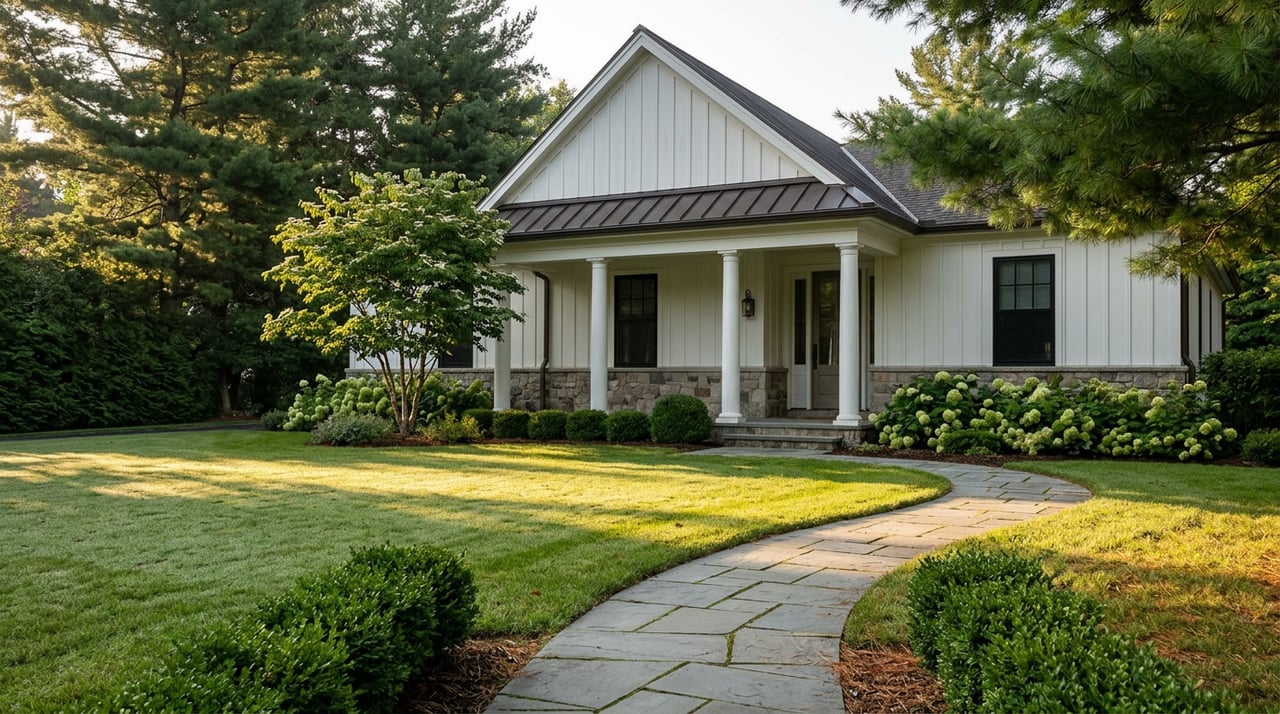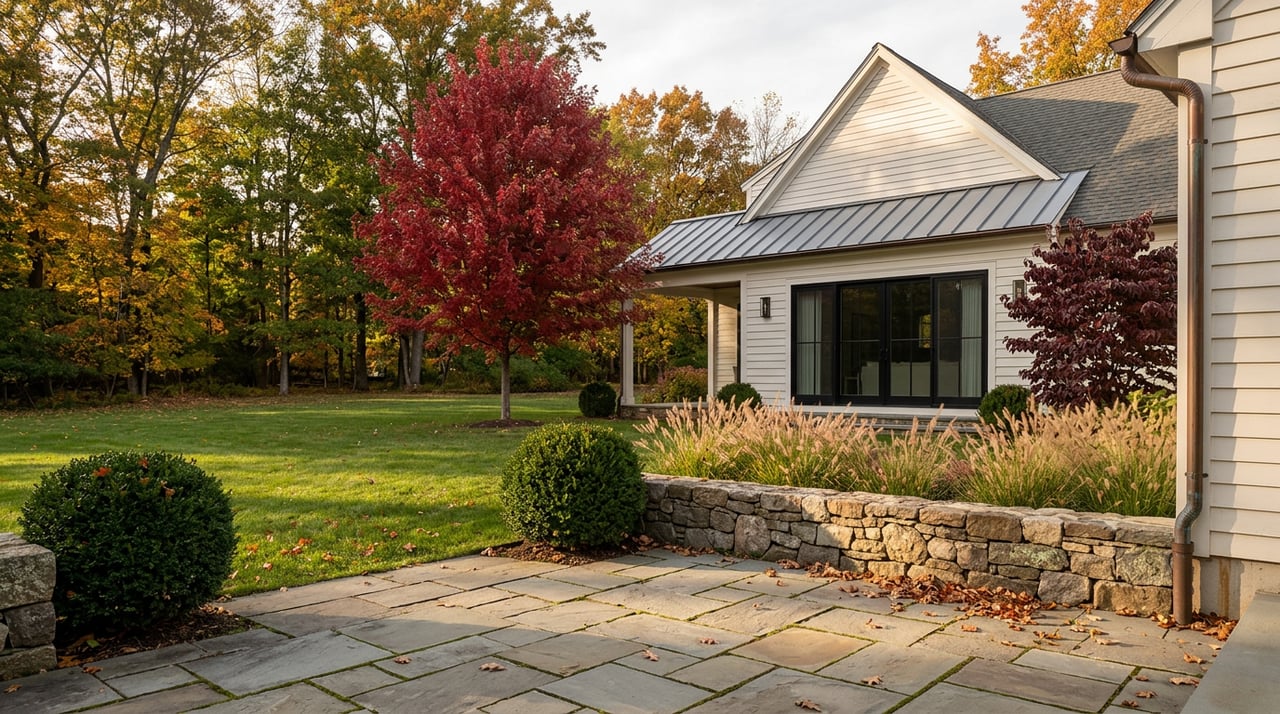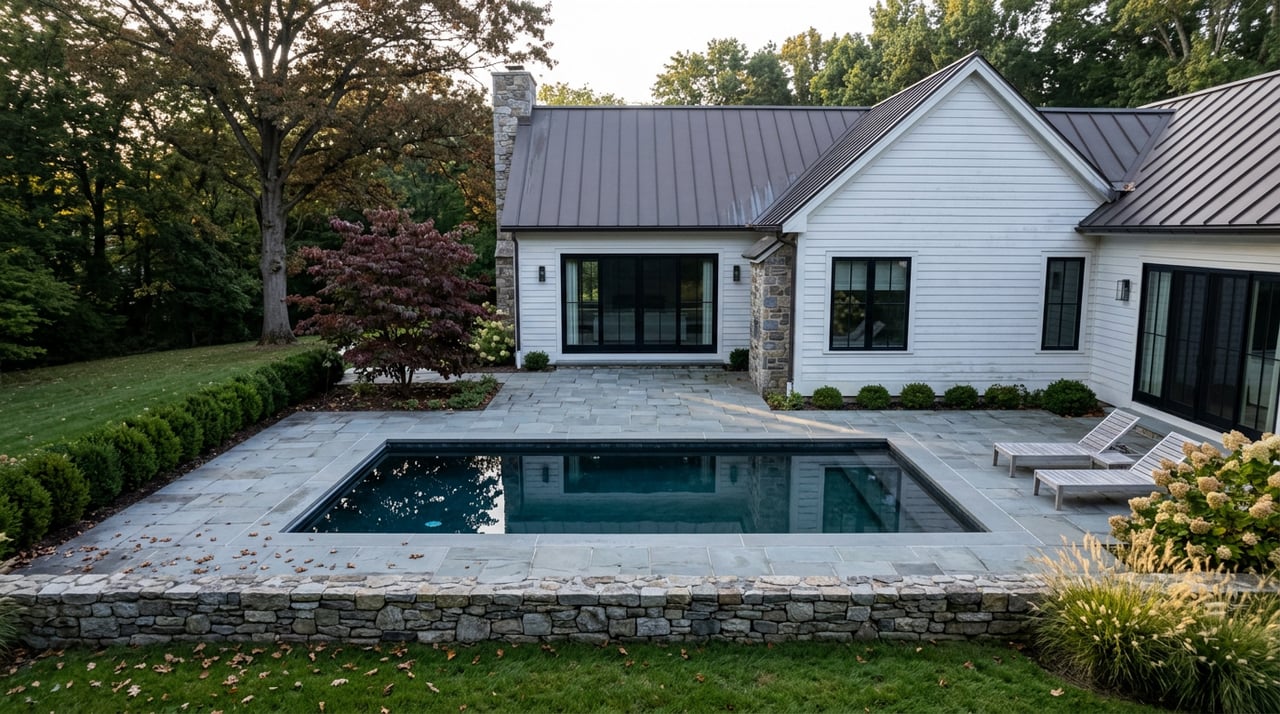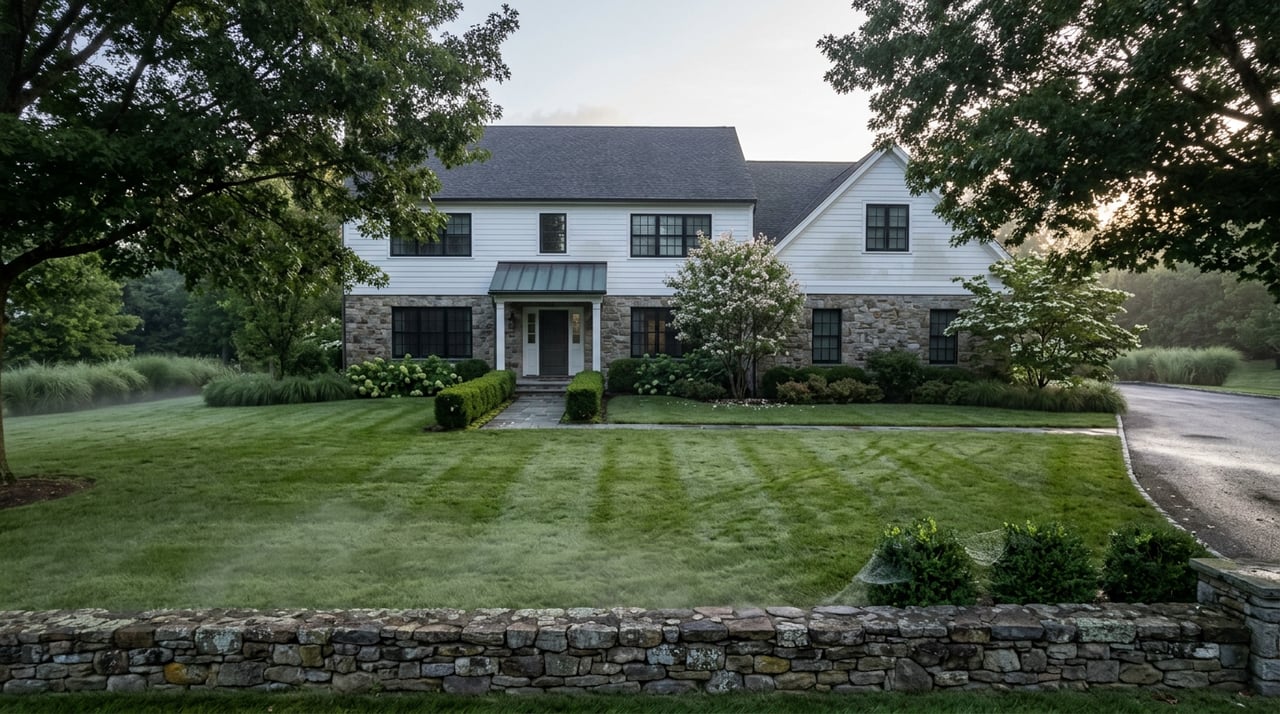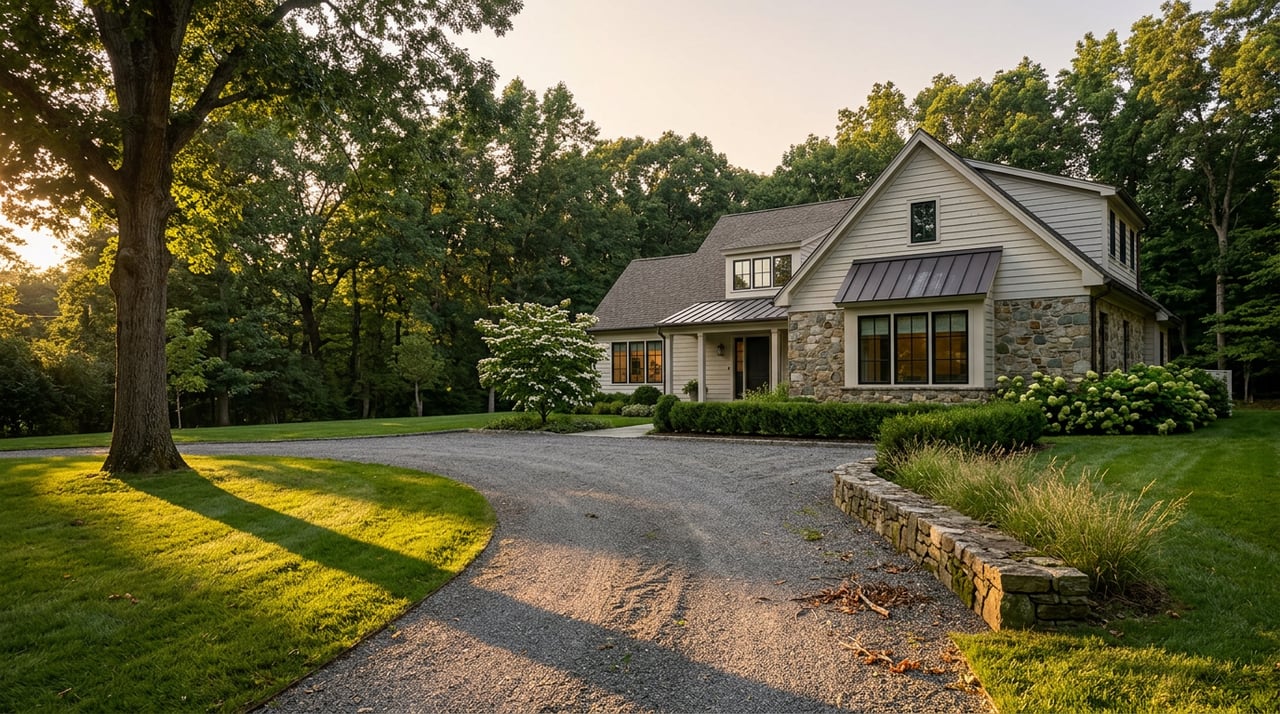
Two recently completed new construction homes on the Main Line both carry a Bryn Mawr, PA address, and both were built to the same finish level buyers expect from a custom Main Line spec home. Paolino Development completed one at 776 Woodlea Road and another at 417 Yorkshire Lane, both sitting on roughly one-acre lots in Radnor Township, Delaware County. A short drive away, Sposato Homes delivered a comparable five-bedroom, five-and-a-half-bath spec home inside the Lower Merion School District, on the Montgomery County side.
Same mailing address. Same builder tier. Same "Bryn Mawr" on the sign. Two completely different tax systems attached to the deed.
That is the part a listing photo cannot show you, and it is the reason a buyer comparing two Bryn Mawr houses on price alone is comparing the wrong number.
One ZIP Code, Three Governments
Bryn Mawr is not a municipality. It is a census-designated place, and the 19010 ZIP code that carries its name spans three separate townships: Lower Merion in Montgomery County, and both Haverford and Radnor in Delaware County. The same ZIP also covers Rosemont and parts of Lower Merion and Radnor that most buyers would never think to associate with the name on the sign.
Each of those townships runs its own government, sets its own township tax rate, and falls under a different school district. Lower Merion Township feeds Lower Merion School District. Haverford Township's slice feeds Haverford Township School District. Radnor Township's slice feeds Radnor Township School District. None of that is visible from a street address. All of it shows up on the tax bill.
The Assessment Math Nobody Puts on the Flyer
The mill rate difference is the part every Main Line guide mentions. The part that gets skipped is why comparing mill rates across the county line does not actually tell you which house costs less to own.
Delaware County, which covers the Haverford and Radnor slices of Bryn Mawr, completed a countywide property reassessment effective January 1, 2021. Radnor Township's own tax office notes that a recent millage adjustment reflected updated assessment values from that reassessment. In practice, that means assessed values on the Delaware County side are meant to track current market value fairly closely.
Montgomery County, which covers the Lower Merion slice, runs on a different system entirely. County records describe Montgomery County's approach as a base-year assessment system, where property values are locked in at a fixed point in time and stay there until the county orders a new countywide reassessment. That means a house on the Lower Merion side of Bryn Mawr can carry an assessed value pinned to an old base year rather than to what the house would actually sell for today.
Put those two facts together and the mill rate stops being a clean comparison tool. A higher mill rate on an assessed value that is artificially low can produce a smaller tax bill than a lower mill rate on an assessed value that tracks close to what the house actually sold for. You cannot line up two mill numbers side by side and declare a winner. You have to know what each county's assessed value actually represents before the mill rate means anything.
What the Stack Actually Looks Like
Here is what the layered tax math looks like on the Radnor Township side of Bryn Mawr, using the rates in effect for 2025 and the 2025-2026 school year:
| Taxing body | 2025-2026 millage |
|---|---|
| Radnor Township | 2.4852 |
| Delaware County | 3.873 |
| Radnor Township School District | 15.7965 |
| Total | 22.1547 |
On the Lower Merion Township side, the township component was set to move for the first time in fourteen years. Lower Merion's 2025 budget proposal, presented in late 2024, called for raising the township's own millage from 4.19 to 4.40, which township officials described as the first township tax increase since 2011. That township rate sits on top of a separately set Montgomery County rate and a separately set Lower Merion School District rate, all layered on that base-year assessed value rather than a post-2021 reassessed one.
On the Haverford Township side, the school district component alone moved to 19.6509 mills for the 2025-26 school year, a 4 percent increase adopted by the school board that June to close a roughly $3.9 million budget gap.
Three different townships, three different rate stacks, three different assessment bases underneath them. One ZIP code holding all of it together.
Same Builders, Different Sides of the Line
The new construction angle matters here because it strips out the variable that usually explains a price gap. When two houses differ in age, finish, and lot size, buyers expect the tax bills to differ too. When two houses come from comparable spec builders working the same corridor at the same finish level, the tax difference has nowhere else to hide.
Paolino Development's recent Bryn Mawr-address completions, including 776 Woodlea Road and 417 Yorkshire Lane, sit in Radnor Township on one-acre lots. Sposato Homes has built comparable product inside the Lower Merion School District boundary. Neither builder is doing anything unusual. They are both simply building where the land is available, and the land happens to fall on different sides of a township line that the marketing copy never mentions.
For a buyer weighing two new builds that both say Bryn Mawr, the honest comparison starts with the parcel's township and school district assignment, not the listing headline.
The Corridor Is Changing While the Line Stays Fixed
The tax question sits inside a Bryn Mawr commercial core that Lower Merion Township is actively reshaping. The township's planning department lists an active Bryn Mawr Master Plan among its current redevelopment initiatives, alongside similar plans for Ardmore and the City Avenue corridor. The commercial district itself runs on 502 public parking spaces spread across eight lots, plus another 199 SEPTA surface spaces near the train station, according to the township's own parking guide.
The most visible recent change sits right at the corner of Lancaster and Bryn Mawr Avenues. The 1928 Bryn Mawr Trust building, now housing a WSFS branch after WSFS's 2022 acquisition of Bryn Mawr Trust, was purchased for $7.6 million by developer Michael Karp earlier this year. Karp's plan converts the building's office space into a financial literacy center for students and adults, reportedly starting with a partnership with Lower Merion Schools.
That corner sits inside the commercial core Lower Merion Township manages under its own master plan and its own parking inventory. A house a short distance south in the Radnor Township slice of the same ZIP code answers to a different township government entirely, with its own capital plans and its own tax decisions.
What This Means Before You Write an Offer
The practical move is simple to state and easy to skip. Before comparing two Bryn Mawr properties, confirm the parcel's township, county, and school district assignment directly, rather than assuming from the mailing address or the ZIP code. A township tax assessor's office or the property's own tax record will show the assigned school district and current assessed value. That assessed value, checked against the taxing body's current mill rates, is the only way to estimate an actual annual tax bill, and it is the only fair way to compare two Bryn Mawr houses that look identical on paper.
A Few Direct Questions
Does the 19010 ZIP code tell me which school district a Bryn Mawr house is in? No. The ZIP code spans Lower Merion, Haverford, and Radnor townships, each feeding a different school district. District assignment is set by the township the parcel sits in, confirmed at the address level.
Which side of Bryn Mawr has lower property taxes? There is no single answer, because the two counties calculate assessed value differently. Delaware County reassessed countywide as of 2021, while Montgomery County still uses a base-year system. A side-by-side mill rate comparison without accounting for that difference will mislead you. Pull the actual assessed value and current mill rates for the specific parcel before drawing a conclusion.
Does new construction get treated differently depending on the township? The state building code applies everywhere, but each township runs its own site plan and land development review through its own planning department. A builder working on both sides of the Bryn Mawr line, like Paolino Development in Radnor Township, is going through two entirely separate municipal approval processes for a comparable product, even though the marketing address reads the same.
Bryn Mawr rewards buyers who check the parcel before they check the price. If you are comparing two houses that both say Bryn Mawr on the sign and want to know what that actually means for your tax bill and your school district before you write an offer, Christine Langdon can walk the parcel-level details with you. Let's Connect.